 YOUR GAMING BUDDY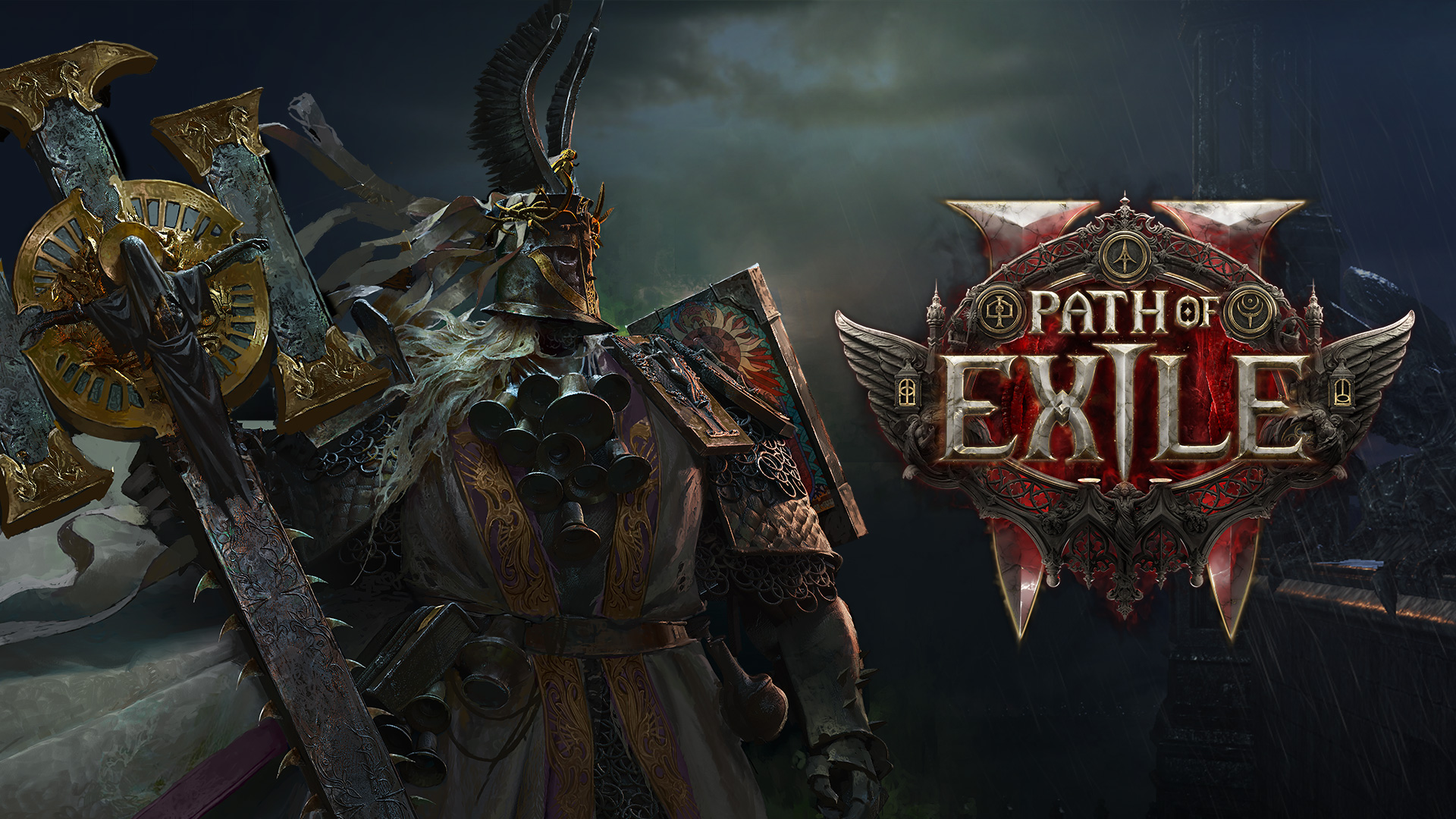
Hero image via Alpha Coders Wallpaper Abyss
Grinding Gear Games spent a decade building Path of Exile into the gold standard of the action RPG genre. Then they threw most of it out and started again. Path of Exile 2 is not a sequel in the incremental sense — it's a reimagining of what an ARPG can feel like, set in the same dark world of Wraeclast but with combat, movement, and systems rebuilt from the ground up. The result is the most ambitious action RPG since Diablo II, and in many ways the best one since.
What Is Path of Exile 2?
Set twenty years after the events of the original game, Path of Exile 2 follows a new cast of exiles through six brutal acts across a continent reborn in darkness. Where the first game was about survival and resourcefulness, the sequel leans harder into consequence — enemies hit harder, movement matters more, and the camera lingers longer on the grotesque art direction that makes Wraeclast one of the most visually distinctive settings in gaming.
The game launched into Early Access in December 2024 and will be free to play at its full 1.0 releaseSteam. Monetisation is cosmetics-only — no pay-to-win, no experience boosts, no gear locked behind a paywall. For a game of this quality, that's remarkable.
Campaign
The six-act campaign is the strongest narrative Grinding Gear Games has ever produced. Each act occupies a distinct biome — from the plague-rotted warrens of Ogham Province to the storm-lashed ruins of the Vastiri Desert — and the world-building is conveyed through environmental storytelling as much as dialogue. The bosses, in particular, are a masterclass in design: each fight is a choreographed spectacle with distinct phases, punishing telegraphs, and a genuine sense of danger that the original game rarely matched.
The pacing is slower and more deliberate than PoE1. This is a considered creative choice, not a flaw. Combat feels weighty in a way that click-to-spam ARPGs rarely achieve — individual enemy encounters carry stakes, positioning matters, and sprinting through a pack of mobs with zero regard for what they do is how you die on a full health bar. Players coming from Diablo IV or the original Path of Exile should expect an adjustment period.
Combat & Classes
The single biggest mechanical departure from PoE1 is the introduction of a dodge roll. This one change ripples through every aspect of how the game feels. Enemies have readable wind-ups, telegraphed slams, and projectile patterns designed to be avoided through movement rather than absorbed through capped resistances and life flasks. It pulls the combat closer to a souls-like rhythm without fully committing to that genre's demands — a careful balance that largely works.
At launch, six classes are available: Ranger, Warrior, Sorceress, Monk, Mercenary, and Witch, each with two Ascendancy subclasses that dramatically alter their playstyle. The Monk's Invoker Ascendancy channels elemental energy through unarmed strikes in a way that feels entirely unlike anything else in the genre. The Sorceress plays like a traditional glass-cannon mage but with a spell-combo system that rewards reading the battlefield. Each class feels distinct at a mechanical level, not just a stat level.
Skills are socketed as gems directly into skill slots, severing them from gear entirely. This liberates itemisation — you're no longer hunting for a six-link chest piece to unlock your build — and it makes experimenting with new skills feel low-friction and genuinely fun.
Build System & Passive Tree
If you've never touched Path of Exile, the passive skill tree will be your first encounter with the series' notorious depth. It is enormous: a constellation of interconnected nodes spanning thousands of passive bonuses that define how your character scales. PoE2 inherits this tree in a refined form, with cleaner node groupings and a stronger signal-to-noise ratio that makes navigation less overwhelming for newcomers while losing nothing for veterans.
The support gem system, which previously allowed any skill to be augmented by slotting modifier gems alongside it, has been rebuilt. Supports now attach to skills directly through a new socketing interface, which is cleaner and more legible than its predecessor. The depth is still there — a single skill with the right support configuration can do things that look nothing like its base behaviour — but the path to understanding it is shorter than it used to be.
The build ceiling is, predictably, sky-high. The community has already documented hundreds of viable endgame configurations, and the breadth of approaches that can clear the hardest content speaks to how well-balanced the underlying systems areGGG.
Endgame
Once the campaign ends, Path of Exile 2's endgame opens up: a map-based Atlas system where you run procedurally modified zones, chase powerful boss encounters, and layer in optional challenge content like Breach, Ritual, and Delirium. If this structure sounds familiar, it's because PoE1 invented it — and PoE2 inherits the framework while offering a fresher set of encounters built around its slower, more deliberate combat style.
The endgame is the area most clearly still under development. Some of the bosses hit the same highs as the campaign fights; others feel rougher, with less-readable attack patterns and difficulty spikes that can feel arbitrary rather than earned. The Atlas passive tree — which lets you specialise in specific league mechanics and reward types — is well-designed, but the volume of content doesn't yet match what PoE1 has accumulated over a decade. That will change with time, and what's here is already good.
Presentation
Path of Exile 2 is one of the best-looking ARPGs ever made. The character models are grotesquely detailed, the lighting system transforms familiar dungeon environments into genuinely oppressive spaces, and the boss animations have a cinematic quality that holds up to pause-and-study scrutiny. The sound design matches: weapon impacts, spell effects, and ambient environmental audio all contribute to a cohesive atmosphere that few games in the genre approach.
Performance on a mid-range GPU is solid. Some particle-heavy endgame encounters can cause dips, but the base experience runs smoothly and the graphics settings give meaningful control over the tradeoff between fidelity and frame rate.
Monetisation
This deserves its own section because it's genuinely worth praising. Path of Exile 2 sells cosmetic items — character skins, weapon effects, hideout decorations, and stash tab upgrades. Stash tabs are the one quality-of-life purchase that has functional value, and they're a one-time cost per account. There are no loot boxes, no battle passes with gameplay advantages, no artificially gated progression. For a free-to-play game, this is an exceptional model that the industry should study.
Verdict
- Campaign bosses are some of the best in any ARPG
- Combat feels weighty and deliberate — every hit matters
- Enormous, rewarding build depth with a lower learning curve than PoE1
- Exceptional art direction and atmosphere
- Completely free to play with cosmetics-only monetisation
- Runs well on mid-range hardware
- Endgame boss variety is thinner than the campaign suggests
- Slower pace will alienate fans of click-and-dash ARPGs
- Some endgame mechanics still feel unpolished (Early Access)
- Stash tab costs add up for serious players
Path of Exile 2 is one of the most impressive action RPGs ever made and, more remarkably, it's free. The campaign alone — dark, gorgeous, and mechanically demanding — is worth more than the asking price of most paid games in the genre. The endgame still has room to grow, but what's here represents a new standard that every ARPG released after it will be measured against.